Legal Requirements and Aging
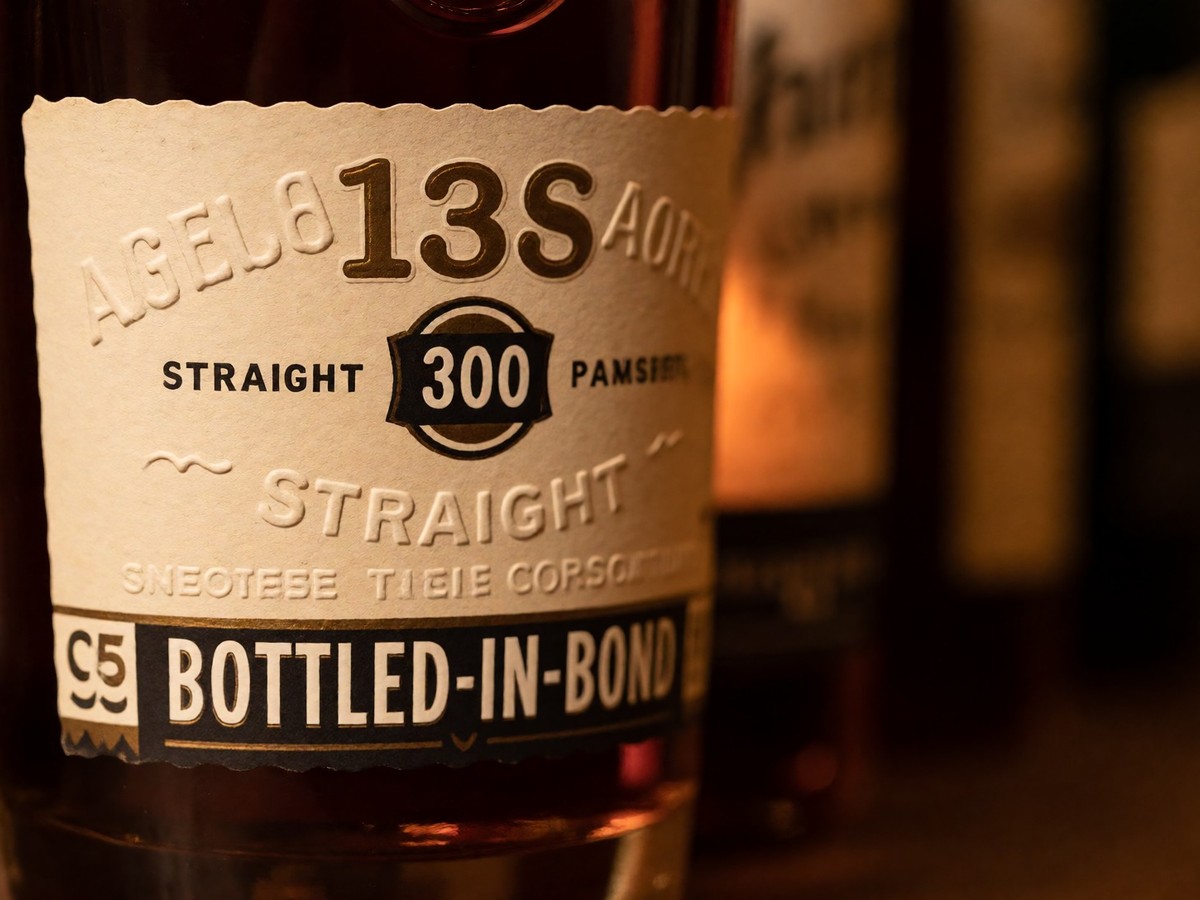
A bourbon label lacking an age statement tells me it is at least four years old if it carries the "straight" designation. Straight bourbon must meet all the standard requirements for bourbon, including a mash containing at least 51% corn. The distiller must not exceed 80% ABV during distillation and must enter the liquid into new charred oak barrels at no more than 62.5% ABV, while the final product must be bottled at a minimum of 40% ABV and contain no additives. If the whiskey is younger than four years, the label must state its age. If a straight bourbon lacks an age statement, I know the whiskey is at least four years old. Bourbon itself has no minimum aging period, but straight bourbon must spend at least two years in new charred oak barrels. If a bottle does not say "straight", it does not automatically mean the whiskey is inferior, as it may simply be a younger whiskey or one that does not meet the additional requirements for the designation. I find the "bottled-in-bond" label to be a very good sign for those seeking a bigger flavor profile and more intensity. This designation requires a single distillery, one distiller, and one distilling season. The whiskey must age for at least four years in a federally bonded warehouse and reach exactly 50% ABV, or 100 proof, with nothing added except water. Since the whiskey must be aged for at least four years in a federally bonded warehouse and bottled at exactly 50% ABV, I find the bottled-in-bond designation to be a very good sign for drinkers.
Marketing Claims and Barrel Variations
Labels using the term "small batch" do not offer any legal guarantee of quality. This is a marketing term rather than a legally defined classification. A small batch might contain anywhere from 10 to 300 barrels depending on the size of the distillery. Russell’s Reserve, for example, uses batches of around 250 barrels, while its sibling Wild Turkey 101 uses much larger batches. Because the blending team selects a relatively limited number of barrels to create a specific flavor profile, I find that "small batch" labels often imply quality, even though the term has no legal definition. I also find "single barrel" releases to be a gamble because these bottles contain whiskey from one individual cask rather than a blend. You will typically see specific barrel numbers and sometimes warehouse locations on the label. Because each barrel produces a limited number of bottles, I find that single barrel releases are typically less available and often bottled at higher strengths, though higher proof is not a requirement. In small batch releases, the blending team often selects barrels with qualities that might otherwise be lost when blended into a much larger core release. However, a barrel selected for its unique characteristics might not suit your palate at all, and two bottles from different barrels can taste noticeably different even under the same brand name. Age statements can also be misleading. The number on the label refers to the youngest whiskey in the bottle, not the average age of the batch. If a distillery combines barrels aged six, eight, and ten years, the age statement refers to the youngest whiskey in the bottle, meaning the label will simply state that the bourbon is six years old.
| Designation | Min. Age | Min. ABV | Specific Condition |
|---|---|---|---|
| Straight Bourbon | 2 Years | 40% | 51% corn minimum |
| Bottled-in-Bond | 4 Years | 50% | Single distiller/season |
| Bourbon (General) | None | 40% | No additives |
Production Methods and Strength
I often look for "cask strength", "barrel proof", or "uncut" to find a more intense drinking experience. These terms generally mean the distillery did not significantly dilute the whiskey with water before bottling. I find that "barrel proof" bourbon can be bottled at up to two proof points below the strength recorded for tax purposes. I find the term "full proof" even more deceptive because it is not a formally defined category under federal labeling regulations. Some distilleries use "full proof" to describe bourbon bottled at the same proof it originally entered the barrel, even if they dilute it back to that proof before bottling. This distinction means "full proof" does not necessarily mean the whiskey is cask strength. Most bourbon producers use the sour mash method to ensure consistency between batches. This involves adding stillage, the acidic liquid left after a previous distillation, to the next batch of grain and water. Distilleries often use a ratio of one part stillage to three or four parts fresh mash. This acidity helps control the pH and discourages unwanted bacteria. Jack Daniel’s emphasizes sour mash in its marketing, but the technique is not exclusive to them. I find that most bourbon is made this way, so the term does not make a bottle stand out from the competition. Proof is a simple calculation where you multiply the alcohol by volume by two. A bourbon bottled at 40% ABV is 80 proof, while one at 50% ABV is 100 proof. Legally, bourbon cannot be bottled below 40% ABV, or 80 proof.