From medicinal syrups to the UK market
I find the history of the Jagdale family fascinating, especially since they transitioned from a small pharmaceutical business into the whisky world. J.N. Radhakrishna Jagdale founded the Associated Drug Company in 1938 and used his chemistry degree to extract organic caffeine from tea waste for use in painkillers. He then established Amrut Laboratories in Bangalore to provide high-grade alcohol for his company, which manufactured "neon-coloured syrups." In 1948, he secured a distillery license and launched Silver Cup Brandy, a brand that people used as a cold remedy for children. Amrut also supplied the Indian Army’s Canteen Stores Department from 1963 to 1995.
The expansion into single malt whisky in 2004 was much more difficult than the family expected. After launching the brand at Cafe India in Glasgow on August 24, 2004, Rakshit Jagdale used his Newcastle University MBA research to target 5,000 Indian restaurants in the UK. His classmate Ashok Chokalingam left an IT job to become the UK salesman, but restaurant owners often rejected him because they believed whisky paired poorly with spicy Indian food, according to Devatha. Sales reached 508 cases in 2004-05, then 719, and reached 741 in 2023. In July 2006, Neelakanta Rao Jagdale almost closed the business after sitting on a bench in London’s Tavistock Square, but he decided to continue his efforts after seeing the statue of Mahatma Gandhi.
The creation of Amrut Fusion and the Spanish cask solution
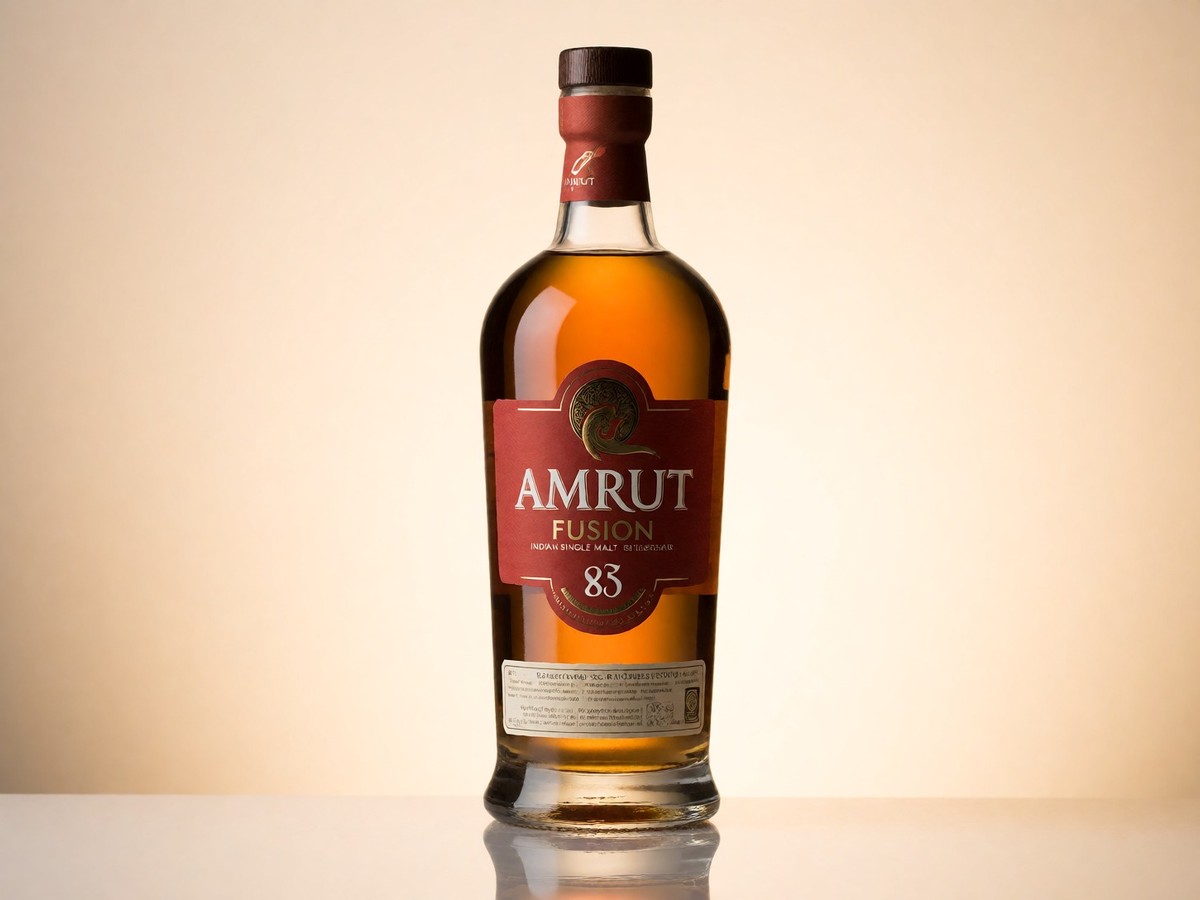
The creation of Amrut Fusion shows how the company handles supply shifts with creativity. In 2009, Neelakanta Rao Jagdale worried his peated whisky supply was running out while at his Ooty summer house. After his son-in-law Thrivikram brought coffee for him and Ashok, the chairman decided to mix Amrut Peated with Amrut Single Malt. He started with 10% peated in his first attempt and 15% in his second before settling on nearly 25%. Surrinder Kumar, the master distiller, refined this blend in Bangalore. Devatha describes the result as "alchemy" rather than a simple admixture. Jim Murray’s Whisky Bible 2010 gave the blend 97 points and named it the third-best whisky in the world, which drew attention to Indian single malt from drinkers outside India.
I prefer the technical ingenuity behind the 2010 Intermediate Sherry release. Because empty sherry casks can grow bacteria during long voyages, the company usually burns sulfur sticks inside them, but this leaves sulfur notes in the whisky. To avoid this, Ashok Chokalingam shipped the whisky, which had already aged in bourbon casks, to Spain to fill the sherry casks there. This meant the casks returned to India full, and the whisky eventually finished its maturation in bourbon casks again.
Hand-bottling on a North Sea island
Amrut Herald provides a unique example of small-batch production. The company shipped four ex-bourbon casks from Bangalore, where they matured at 3,000 feet above sea level, to Germany. After the whisky traveled from the port of Cuxhaven to the car-free island of Helgoland, it spent more time maturing at sea level. Since Helgoland lacks a bottling line, Ashok Chokalingam traveled to the island to bottle the whisky by hand using a pipe to draw liquid from each cask. He filled and labeled the bottles, then he sealed them with his German importer and friends, resulting in three casks for the world and one for a duty-free shop on Lung Wai. This release was the first whisky ever matured on Helgoland and the first to be bottled there. The name Amrut refers to the Sanskrit word for the life-giving nectar that gods and demons churn from an ocean of milk in the Samudra Manthan.