Successful mail-order deals and bottled bourbon
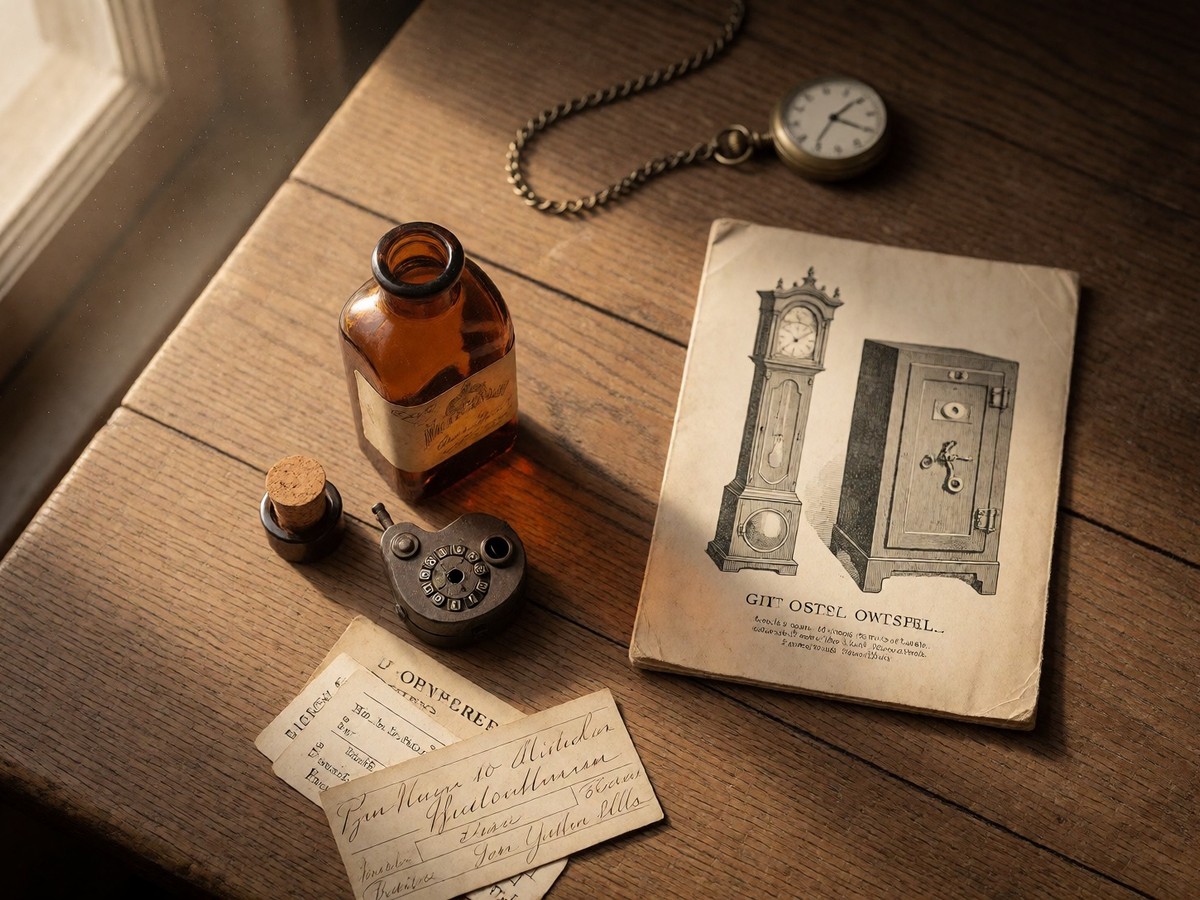
The most successful mail-order deals of the late 1800s involved free furniture and bulk discounts. Liebenthal Brothers & Co. sold a case of blended whiskey for $10 by mail and provided a sofa to anyone who ordered. These mail-order tactics defined a period of intense competition. A Cincinnati distillery let customers choose between a grandfather clock or a 500-pound safe as free gifts. The Casper Company of Winston-Salem, North Carolina, advertised itself as the country’s largest mail-order whiskey house. It sold Mountain Dew, a five-year-old corn whiskey, for 40 cents a quart when customers purchased a 20-bottle case, which was a price drop from 60 cents per quart. The mail-order business thrived because the federal post office could not stop residents from ordering whiskey even in counties that voted to go dry.
The Hayner Distilling Company of Troy, Ohio, was described as the biggest in the business and advertised four quarts of seven-year-old rye for $3.20 with postage included. This company also produced a whiskey decanter that featured a combination lock in its stopper. In 1913, the Webb-Kenyon Act allowed dry states to stop liquor shipments, which hit the Hayner business hard. George Garvin Brown, a pharmaceutical salesman in Louisville, started selling Old Forester bourbon in sealed glass bottles in 1870. He added a signed guarantee to the label because his doctor customers complained about inconsistent whiskey quality. Old Forester ran its first advertisements for ordinary drinkers in Kentucky magazines around 1881.
| Company | Product | Special Offer/Price |
|---|---|---|
| Liebenthal Brothers & Co. | Blended whiskey | Free sofa with $10 case |
| Casper Company | Mountain Dew corn whiskey | 40 cents a quart for 20-bottle case |
| Hayner Distilling Company | 7-year-old rye | 4 quarts for $3.20 with postage paid |
Notorious medical claims and regulation
The most notorious whiskey claims involved fraudulent medical endorsements. Duffy’s Malt Whiskey from Rochester, New York, claimed to remedy everything from indigestion to consumption. Walter Duffy advertised these health benefits using testimonials from nurses, clergymen, and doctors. According to Brian Haara, some of these endorsements were bought or simply made up. One nurse even sued for libel when she discovered her name appeared in an advertisement. In 1905, journalist Samuel Hopkins Adams wrote in Collier’s Weekly that "Duffy’s Malt Whiskey is a fraud, for it pretends to be a medicine and to cure all kinds of lung and throat diseases." One clergyman featured in the advertisements ran a matrimonial bureau and received $10 for his picture. Adams’s series, The Great American Fraud, helped lead to the Pure Food and Drug Act of 1906.
The 1897 Bottled-in-Bond Act provided a way for distillers to prove their whiskey was genuine. To use the label, a distiller had to bottle whiskey from one season at 100 proof after it spent at least four years in a government-supervised warehouse. Some brands used slogans to suggest the government supported them, such as "Uncle Sam is Our Partner," while others made promises like "The whiskey without a headache." A Bardstown bourbon called Old Greenbrier even ran a verse claiming "That without it at Manila / We would not have won the day."
Once Prohibition began in 1920, doctors could still prescribe whiskey. Six companies, including the maker of Old Forester, Brown-Forman, were licensed to sell bourbon and rye to pharmacies in pint bottles. This medical use continued for some time after the 1933 repeal of Prohibition. Distillers agreed to keep spirits advertising off radio and television, a code that stayed in place until 1996. The era of bizarre marketing ended, and there are no more free sofas.